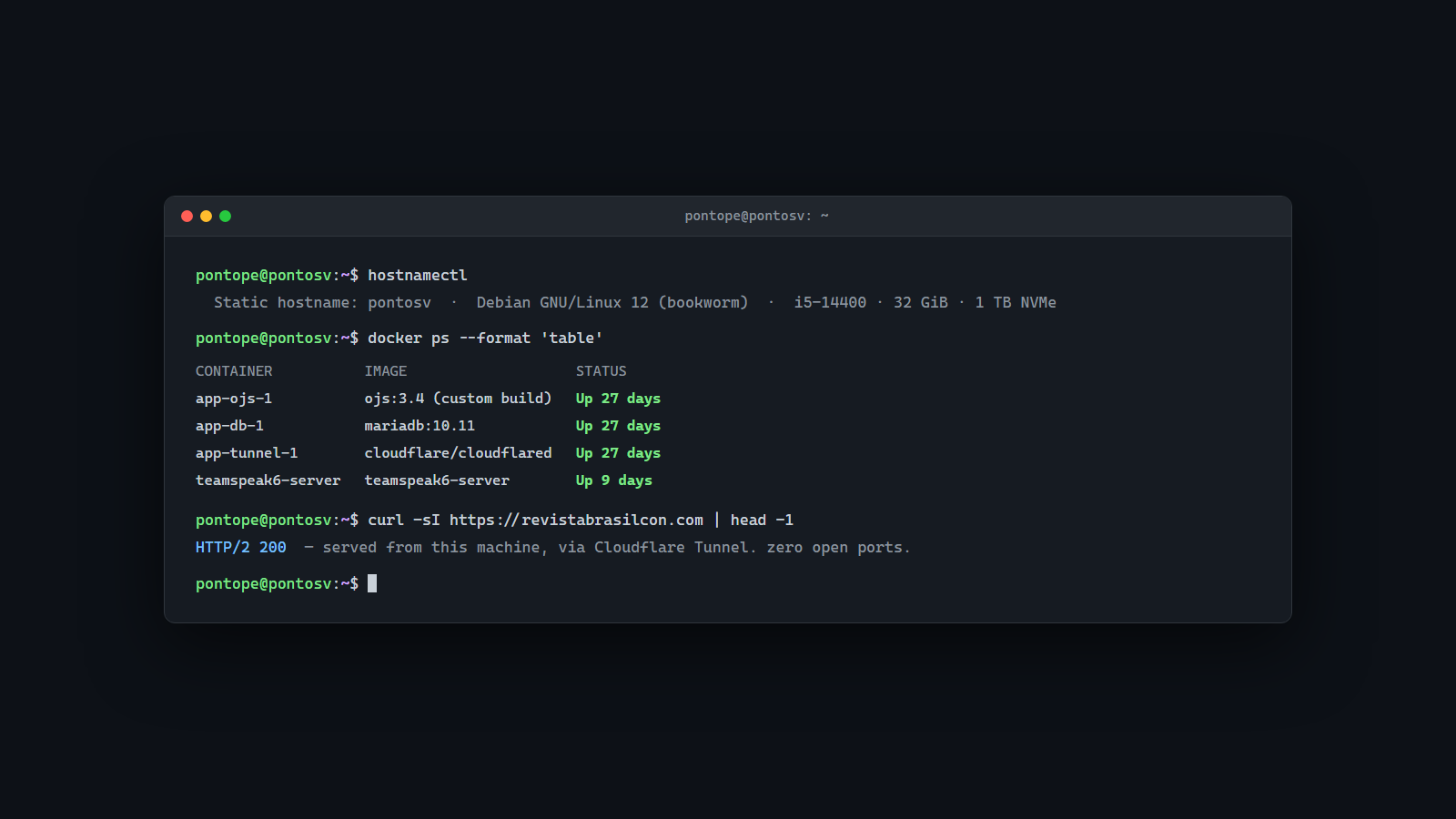
A bare-metal Debian 12 server I built and administer solo - the production machine behind the BRASILCON OJS journal. Intel i5-14400, 32 GiB RAM, 1 TB NVMe, on a residential connection in Curitiba. It is my live laboratory for the discipline that actually matters in security: deciding what gets exposed, why, and proving it.
EXPOSURE AS A DELIBERATE DECISION - The threat model is simple: assume the WAN is hostile and minimize what it can see. The flagship service (the journal) reaches the internet through an outbound-only Cloudflare Tunnel - zero inbound ports for the box's most valuable workload. The only two ports forwarded on the router exist for the self-hosted TeamSpeak 6 voice server (Docker), and each is documented with its justification. Everything else - admin panels, Cockpit, file sharing (NFS/Samba), the web file manager - is LAN-only by policy, with an explicit written rule of what must never be forwarded. SSH is key-only; password authentication is disabled in sshd config.
LEAST PRIVILEGE IN THE SMALL THINGS - The DuckDNS dynamic-DNS updater runs as a dedicated unprivileged system user via a systemd timer, with its token in a root-owned config file at mode 640 - not as a root cron job with the secret inline, which is how most self-hosters do it. TeamSpeak runs containerized with only its two required ports published. The Docker stacks publish no other host ports.
INCIDENT FORENSICS - THE STORY I TELL IN INTERVIEWS - For ten weeks the server "randomly lost internet" every 1–2 weeks, and reboots only reset the clock. Instead of another reboot, I dug through journald and the packet path and found three stacked root causes: two DHCP clients racing on one NIC with independent renew schedules; a rogue DHCP server on the ISP modem that hijacked the default route (the smoking gun was a single journal line at 3:24 AM); and three firewall managers - firewalld, ufw, iptables-persistent - silently fighting each other and Docker, so every previous "fix" had edited a layer that wasn't doing the blocking. The cure was architectural: exactly one owner per layer. One DHCP client, one firewall authority, Docker managing its own chains. Zero recurrences since.
OPERATIONS AS CODE-ADJACENT DISCIPLINE - The server is governed by a living handbook: services-and-ports map, firewall policy with rationale, full incident history with root-cause analysis, an honest risk register, and triage runbooks ordered by likelihood - written so that any competent human or AI agent could operate the machine cold. Documentation is a security control; this box treats it like one.